“The ordinary person’s mind is the Way. This very mind, just as it is, is Buddha.”
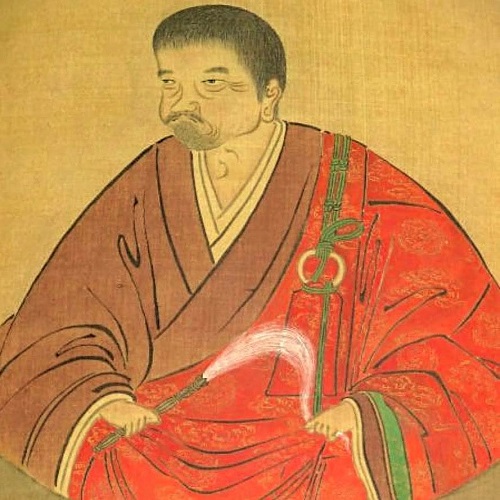
Recently my fellow teacher, Kendo Roshi, suggested that we look into Bankei’s writings together. While reading Bankei’s writings what seemed so famailiar is what I often refer to as “resting in naturalness [of mind]”. Bankei says that, for example, if you are listening to someone speak or cooking or engaged in a bit of work, fixing the fence, as you are attentive to what you are focused upon, you also are aware of say, the sound of a crow cawing and what he refers to as Unborn Mind does not mistake it for the sound of a dove. No active thinking about the sound of a crow or sound of a dove, just experiencing it as it arises. Try this sometime; as if using your peripheral vision, try to use your peripheral mind. Notice what you are experiencing without your intentional focus. What happens then?
This effortless, unintentional discernment is resting in naturalness or Bankei’s Unborn Mind. This is what I refer to as cognitive awareness. When resting in naturalness of mind cognition is present, effortlessly. This is the so-called Bodhi-mind in Zen. It is the state of Mu.
Original, unconditioned awareness is what we are born with. This naturally exists before thoughts arise. All beings are inherently in this state, which is free from delusion, discrimination, and suffering. The Unborn Mind is like Mu, it is “things-as-it-is” and is not something to be attained—it is already present.
We have been taught by our parents and the world we grow up in to become “habitually mistaken” by attaching to our thoughts and desires. This teaching discourages over-intellectualizing or striving. Such efforts often lead us away from our innate clarity. Please simply allow thoughts to come and go without attachment. When we don’t cling to or follow thoughts the mind naturally returns to its original, luminous state. Really, it’s just a matter of reminding ourselves to do so when we notice our attachment to a particular thought that comes up. It is in this state of awareness, compassionate and appropriate action arises spontaneously
It seems that what Bankei is simply saying is: you are already what you seek.
With deep consideration it is clear that the need for taking refuge is greater than ever. Because of this I have decided to return to teaching the Dharma.
As the chaos of the dusty world unfolds around us, we take refuge in Zazen practice; in the Buddha, the Dharma and the Sangha. It is here we find peace, clarity and compassion. A calm mind is a kindness to all beings. When we are at peace, we cease to spread agitation. When we are clear, we become a source of clarity for others. In this way, taking refuge in meditation is an offering to those around us and all beings. By returning to stillness, we return to our original kindness, our natural wisdom, and the deep interconnectedness of all things.
Deep peace,
Issan
WeeklyZazenPractice:
TuesdayEvening: 7pm-8:10 Zazen and *Dokusan with Issan Sensei
Histories of ages past Unenlightened shadows cast Down through all eternity The crying of humanity
-Donovan, Hurry Gurdy Man
This past week I read of pieces by enlightened writers regarding the election results. Eve Marko, Zenju Earthlyn Manuel, Matthew Cheney , and Bhilkkhu Bodhi all wrote about their reactions and feelings. Their expressions spanned the emotional gamut from rage to compassion. My emotions are likewise, as are the voices I heard from our sangha members.
I heard there was tradition in Japan of supporting whomever was elected in order to give that person the opportunity to pursue their agenda so the country might see if it actually works. I don’t adhere to this philosophy considering the malicious degenerate that has been elected. I’d prefer he had no chance at all.
I fully agree with Bhilkkhu Bodhi’s recent call to action;
“I here find myself compelled to dissent from a typical response I often encounter among Western Buddhists. This is the response which says that, in any conflictual situation, we must adopt a stance of detached neutrality, that we shouldn’t take sides but should try to see the good and bad hidden in both sides. That’s a style of Buddhist rhetoric I don’t want to accept. I also don’t want to accept the familiar line, “Everything is impermanent, so don’t worry.” It’s true that everything is impermanent, but by the time this regime ends, millions of lives may be lost and damaged and the entire ecosystem of the earth disrupted beyond repair.”
It seems many of us who are awakened to the suffering of sentient beings are particularly sensitive to the unfolding of evil. Roshi Robert Aiken:
“If Buddhist metaphors seem removed from the standards of our modern acquisitive society, the point is that any ideal of dignity and honor and integrity will stand out vividly in contrast to the conspiracies and conflicts of race and nation-state that endanger humanity-and in contrast to anthropocentric conspiracies and conflicts that endanger the Earth and it’s many beings.”
“We have a model of personal dignity and honor and integrity for our difficult task of practice within the predatory systems that surround and infuse our lives.”
I say, as such, our engagement with Zazen meditation, dokusan, Dharma learning and Sangha points towards the same venerable ends.
Myoshin Roshi said to me; “To be enlightened is to live with the suffering of all beings.” Perhaps all suffering is a prayer for peace and enlightenment of all beings. So clear, just the reality of that awareness. Are we prepared for that reality now? Are we prepared to act?
To be a person of no-rank is the foundation of understanding and right action. The Morning Star says: “However we cannot afford to remain in the complacent mind-set of “nothing special”, for when malice appears, you will be at a loss, and you will retreat or lash out in response, making things much worse. Maintain your practice and understanding will deepen.” This sentiment is born of the realization that the very clay from which we emerge is the sacred ground that is the nobility of all beings, your nobility.
There is balance in the cosmos. Around every shadow gathers light. Are we not the light around this particular shadow of darkness? Being the light of awakened consciousness begins with honoring the awakened Buddha that you are. The marrow of the ancestors is within your bones. Live up to it!
The Dharma elucidates itself vigorously regardless of countless crises throughout time and space. The dharma is resilient. We are resilient, we have the support , wisdom and ability to recover from and adjust to misfortune and change. We may take refuge and sanctuary, gain wisdom and engage actively with the Buddha, the Dharma and especially now, the Sangha. Take these gifts with you when taking action in this hurt world and share what these Three Treasures have given you.
Deep Peace & Great Love,
Issan
Schedule 11/10-11/16
Monday: 6:30am, Zazen, Aishi hosting
Wednesday, 6:30am, Zazen, Dokusan and service, Issan Sensei
Thursday, 6:30am, Zazen, Andy hosting
Friday, Zazen, Dokusan and service, Zenho Roshi
Noah’s Poem
Yesterday morning I was awoken by the joyful
Scurrying of a squirrel on my skylight window
And I am touched by these creatures that can’t help but
Be themselves
The birds that know nothing of the news
And stand in blues and purples and celebrate the day just the same
At the time, I had been reading a lot of Dogen and sitting a lot of zazen. (is there such a thing as too much?)
Then, one day, riding my bicycle on Snow Road, south of Old Mesilla, NM, looking directly into the horizon at the Organ Mountains I had a realization moment and it was so overwhelming that I stopped and got off my bike, staring at the mountains and it occurred to me; “those mountains! they’re sleeping Buddhas! Lying down Buddhas!” My thoughts stopped and for a moment and my perception was clear. What I experienced was mountains-as-mountains. Ever since then when I see mountains-as-mountains I feel a deep serenity and solidity. It’s real to me.
Long before I ever heard of Dogen, in the mid- 70’s, I was introduced to the writing of the zen-beat poet Gary Snyder, which for me was an early introduction to Zen. He was, along with Richard Braughtigan, one of my favorites. I had read Rip-rap and Cold Mountain Poems. Since I have read Dogen, I now see that he was a seminal source of inspiration for Snyder. Gary Snyder was a Dogen re-incarnate for the times in which he lived, a voice of Zen and the American wild-ness experience. He went on to pen a really long poem called Mountains and Rivers Without End, it is an epic of geology, prehistory, mythology real and imagined based in Asian art, Native American storytelling, Americana and Zen. It’s his early opus, I consider it his Shobogenzo. When I eventually encountered Dogen’s Shobogenzo, Snyder was waiting right there for me!
The Mountains and Rivers Sutra offers us mountains and rivers as the expression self-so or tsu-jan. The usual ideas of dualistic thinking about animate and inanimate, self and other, sentient and non-sentient beings are transformed into the expression of enlightened view through his poetic imagery. Mountains and rivers are not inert landscapes but are active expressions of the Dharma, embodying Buddha-nature, the intrinsic reality that pervades all existence.
One of the wonderful expressions in the sutra is: “the blue mountains are constantly walking,” I love this! Does he mean this literally? The “walking” of mountains describes the dynamic nature of all phenomena; existence itself is in constant flux, and there really is no difference between the movement of a human and the movement of a mountain. This is interbeing, interconnectedness; all phenomena intimately share the same fundamental reality. So, yes, literally! I can hear Snyder’s Rip-rap…granite ingrained…
This view is suchness, awareness, rigpa, quiet-mind. Mind-at-rest-in-naturalness. These mountains and rivers are not symbols of something beyond themselves; they are expressions of themselves, expressions of truth, tathātā, in their own right, manifestations of Buddha-nature as it is, as it actually exists.
Through practice, we come to experience first-hand no separation, Hsin Hsin Ming’s no choosing.
“Attaining the Way is not difficult, Just avoid picking and choosing. If you have neither aversion nor desire, You’ll thoroughly understand. A hair’s breadth difference Is the gap between heaven and earth.“
That which we once experienced as the distinctions between animate and inanimate become the whole, no gap. We perceive mountains and rivers as having and expressing intrinsic wisdom. Within the expression “all-beings” we can understand with our hearts that this truly includes the ten thousand things, the entire cosmos. We hear the rip-rap of the universe.
When we realize the truth inherent in our relationship with the natural world we recognize the inseparability of all existence. Do you include yourself?
The Sleeping Buddhas -Organ Mountains, Las Cruces, NM
October 25, 2024: Phil Lesh, legendary Grateful Dead bass player, consummate musical visionary, and family member passed away peacefully at his home surrounded by family.
Look out of any window Any morning, any evening, any day Maybe the sun is shining Birds are winging, no rain is falling from a heavy sky What do you want me to do To do for you to see you through? For this is all a dream we dreamed one afternoon long ago
Walk out of any doorway Feel your way like the day before Maybe you’ll find direction Around some corner where it’s been waiting to meet you What do you want me to do To watch for you while you’re sleeping? Then please don’t be surprised when you find me dreaming too
Look into any eyes You find by you; you can see clear to another day Maybe been seen before Through other eyes on other days while going home What do you want me to do To do for you to see you through? It’s all a dream we dreamed one afternoon long ago
Walk into splintered sunlight Inch your way through dead dreams to another land Maybe you’re tired and broken Your tongue is twisted with words half spoken and thoughts unclear What do you want me to do To do for you, to see you through? A box of rain will ease the pain and love will see you through
Just a box of rain, wind and water Believe it if you need it, if you don’t just pass it on Sun and shower, wind and rain In and out the window like a moth before a flame
And it’s just a box of rain, I don’t know who put it there Believe it if you need it or leave it if you dare And it’s just a box of rain, or a ribbon for your hair Such a long, long time to be gone and a short time to be there
Kinda says it all, doesn’t it?
Phil’s song Box of Rain is perhaps one of the greatest Zen sutras ever written, in my “Gratefully-saturated-Zen-Dead” opinion. It speaks me of truth, joy, comfort and hope as it would to anyone who listens with their heart. Box of Rain has offered its gift to me throughout my life in times of sadness, hopelessness, confusion, melancholy and times of longing and heartache.
But most of it all it remains an anthem to taking things as-it-is, turning your face to the light though the shadow may remain upon you. To me it is a profound testament to glimmering hope, inner vision, strength, oneness and the transience of all things, especially this life we live.
Phil, one more musical prophet has joined the Angel Band…Such a long, long time to be gone and a short time to be there. We’re glad you’re there.
So click on the link and give a listen for yourself…and for Phil.
Deep Peace & Great-ful Love
Issan
SCHEDULE 10/27-11/2
FRIDAY: 6:30am, Zazen, Dokusan and Service, Issan Sensei
Noah’s offering
My mind has been disturbed as of late
This great swing of yes clarity oh yay this
To
What am I doing!?!
And then this morning
As I found my breath cooking oatmeal on the stove
I saw the bubbles pop up
So gentle so cute!
I don’t know much about wonder
But I am seeing
Humor
And how the tragic and the comic may live within the other
And how the little boy and girl dressed as pumpkin and Minnie Mouse
Sitting next to me on the subway
Can be like a tickle or a sun slipped celebration
Making that dark tunnel rejoice for a brief just right
Moment in the day
…and he sent a video:
Title: Asking for help from spirit
Alternative title: You are four and you want your mom to pick you up.
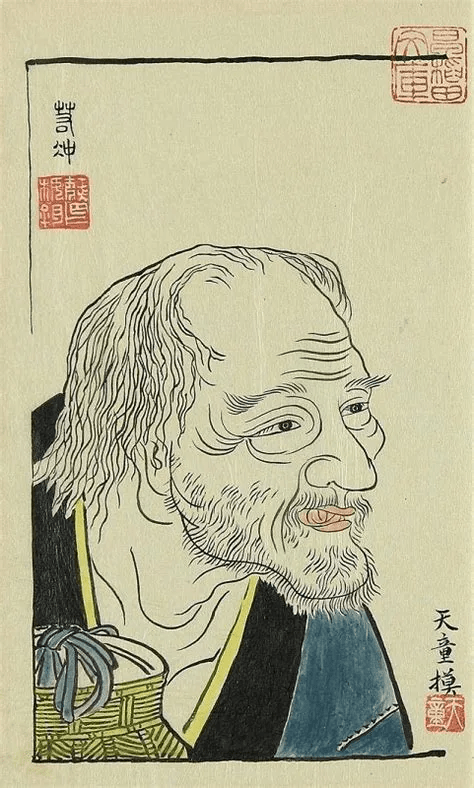
This poem is from “The Old Tea Seller”a book of poems by Baisaō, an 18th century poet from Kyoto. He was a Buddhist priest who made his living selling tea on the streets. “Though he would never consider himself a Zen master, many considered a visit to his tea stand to be of profound significance.”
There is an expression in Hebrew; לבד הנשמה טהורה, it means “Alone the soul is pure”. It was told to me by my very old Aunt Esther, at a difficult time in my life when I felt very alone. I sought counsel and advice from trusted friends but it seemed to ring hollow. I wrote it on the wall of my pottery studio and over time, began to understand what it meant for me:
There is a time which falls upon each of us when no outside voice can bring enlightenment to our present condition.
Perhaps, a time to make myself some tea.
Baisaō’s poem points directly to our solitude. To our inner world.
The earthen pot, none other than the vessel of our consciousness. The world stirs constantly around us, our thoughts, desires and travails. The many waves that create turbulence in our daily lives, distractions. Yet just as these waves are contained in the pot so too is something deeper, a stillness that is the truth of being, just under the surface, a truth found only in solitude.
Impermanence and transience, like the thin wail of the wind we might say, speak of the imperceptible forces that both guide and influence us. These are the subtle movements we perceive as the illusion of time and constantly shifting circumstances. Sometimes our perceptions cut through with acuity, sometimes veiled, as cloaked in steam.
Yet, amid these turbulent waves and transient winds we have no choice but to engage in the activities of all Buddhas; “eating rice and walking, standing, sitting, lying down”. The mundane tasks that are the stuff of life. When we are in touch with our natural awareness, each task, no matter how simple, may be an act of caring and presence, for ourself and expanding outwardly toward others. Staying in touch with that awareness is a challenging vow. When attention is given to these simple acts we may “forget the self”, and in doing so relieve our personal confusion and suffering. Isn’t this the initial step that is bound inextricably with the bodhisattva vow of relieving the suffering of all beings?
When we ‘serve tea to all beings’ aren’t we attempting acts of kindness, sharing wisdom and practicing understanding as best we can? Though few may understand its real taste it is nonetheless a compelling commitment that we tip the spout of that earthen vessel into their teabowl.
How is it that ‘no one who comes understands it’s real taste’? While a teacher can offer wisdom, point-out, few truly grasp it. This is simply the nature of enlightenment/delusion. Realizing enlightenment is wholly personal, even though by its nature it is interpersonal. Touching the warmth of enlightenment is a great benefit of practice and enriches our lives, but what of the real taste that Baisaō speaks of?
Baisaō’s real taste may be understood as awakening to our true nature. The fact is, the deepest understandings and truths may be pointed toward but can never be given. Theses truths must be discovered within, in solitude of mind. When we practice zazen, when we sit alone, we brew the tea of ourself. The profound personal insights we cultivate are through practice, small awakenings, when we pay attention to them, are the gradual “mist soaking the robe” that saturate us with understanding, enlightenment, awakening.
This is the tea beyond compare; first, the awakening to the self, followed by the dissolution of the self, and then the experience of the interconnectedness of the ten thousand things, of all beings, our true nature. This is the weight of water, the fullness of the teapot and the elegant, functional form of containment. This is the taste of oneness that transcends ordinary taste or ordinary understanding.
Find it for yourself.
The true depth of this experience is not something that can be shared with words or actions. Turning words and compassionate actions are the symptoms of this deep personal understanding, but it cannot be transmitted through words and writing. This taste must arise from within the benefaction of solitude when we sit with ourselves, experienceing our own clarity and wisdom; the taste beyond compare. Knowing this taste we meet directly with the essence of life as we engage in the activities of all Buddhas.
Is it possible to move through life with a sense of ease in this stressful world we inhabit? Can we embrace a way of being that is not forced and free from excessive striving, that is true to nature?
There is a natural rhythm in nature that is in tune with the rhythm of our being. There is a natural unfolding of existence, a choice-less-ness. Rivers flow without effort, tides rise and fall, plants grow toward the light. Nature manifests without effort, simply a result of cause and effect without any desire to unfold differently.
Although we cannot abandon all effort in life, we certainly can work to develop a trust in that there is nothing missing. Although we work to alleviate suffering, there is nothing to fix. The world we live in, even with all its suffering, is complete as it is. We are part of that completeness. Can we rest in that completeness? Is this an aspect of your Zen practice?
Acceptance of our completeness, with all its perceived lack and attendant stumbling is the challenge we face if we are to live with a natural sense of ease and authenticity. This acceptance does not mean that we live with abject passivity or indifference. If we cultivate our awareness, in this moment, we are able to see more clearly. Our desire to control outcomes becomes glaringly apparent. If we are able to momentarily set aside trying to force outcomes we alleviate our stress and create a space for the natural ease of living to arise. We can act more effortlessly with greater compassion towards ourselves and the world around us. As in nature, the leaf falls when it is time, without struggle or resistance or effort.
This way requires our deepest humility. We are part of of it all, Maha, the circle so big it has no edges. When we fall into the trap of thinking we are separate we become artificial; our actions manipulative, for better or worse. We find ourselves swimming upstream constantly, an exhausting effort and life feels unmanageable.
Letting go is necessary to regain our clear view and sense of comfort in life. Letting go is a process of remembering the simplicity of life, as in nature, as things unfold in-and-of themselves. The stream of life. Freeing ourselves from these attachments to outcomes and self-centered ideas we find ourselves willing participants in the natural order of life’s unfolding rather than acting as the struggling dictator at the control panel of the universe.
One lesson Zen practice teaches us is that without the constraints that we place upon ourselves of trying to control outcomes, we find ourselves in the natural flow of life. We regain the sense of being part-of rather than separate-from and we can relax. When we let life, our life, the lives of others and the mysteries of the world around us, unfold with trust in ourselves we recognize that unfolding as part of the natural order. Perhaps, it is there we find ease.
“When the mind is still, the whole universe surrenders”
~Lao Tzu
Descending Wolf Creek Pass, Colorado
Deep Peace and Great Love, Issan
Schedule 10/13-20
Wednesday, 6:30 am, Zazen and service at the Teahouse, Dokusan with Issan Sensei
Friday, 6:30 am, Zazen at the Teahouse, Sokukai opening
I’ve been reading Norman Fischer’s book, Zen Teachings on the Practice of Lojong. It’s a mind training practice on compassion. Fischer has put a Zen spin on this traditionally Tibetan practice. A Dharma brother suggested it. I’ve also had a meaningful encounter with another dharma brother who is deeply engaged with Tea Ceremony, an intentional act of presence and being, in peace. The philosophy and aesthetics of tea ceremony had a profound effect on me as a potter and introduced me to way of seeing that influenced my engagement with Zen. I’ve been happily reminded of some of its core values.
It’s a generally accepted idea that all Buddhist practice fundamentally has the same primary purpose, the first of the 4 vows; “Beings are numberless, I vow to save them”. This is the meaning of bodhicitta. To work to relieve suffering. Helping out in whatever way we can. Clearly this is a noble yet, in a practical sense, unattainable vow. The point here is not accomplishment in totality, but rather the action of continuing the work we vow to do. When we experience a realization of total non-separation (emptiness, as such), dissolution of the dualistic thinking of ‘self vs other’, then we realize that, in fact, bringing peace to oneself is, in a very real way, bringing peace to all beings. Does it seem a bit abstract to you? Understandable, but this is the reality of it. This is because of the truth of the undeniable interconnectedness of all things. Can we detach ourselves, even for a moment from the habitual self-centered thoughts that constantly ask “What’s in it for me”? Is it possible to just engage in the work-at-hand with our full heart and mind focused on relieving the suffering of another? Haltingly though we may proceed, even in great doubt, we carry-on. This is the vow we take as Buddhists.
It’s my view that there is another issue at hand to work with that is implicit in our Bodhicitta vow: To Live Life Fully. One of the great gifts of practice has been the slow shift in consciousness and focus from a self-centered reality to a reality that truly sees and experiences things as they are and acting with intention. Not only is this a gift but a great responsibility. It’s said; “not knowing is the most intimate” and at the best of times we experience that “not knowing” as it emerges fully as awareness. There is a clarity that presents itself. This reality-shift encompasses an inconceivable range of emotions, reactions and thoughts. Many are quite uncomfortable, but present none the less. To turn away from these with ego-rationalization and justification is stealing from ourselves the abundance of a life fully lived. We have vowed to face life full-on which is not always our initial reaction to difficulty or even to exuberance.
Not knowing may engage us in a deeper and more profound way of seeing however there actually IS stuff we know! The danger about this stuff-we-know is that we’re habitually programmed to react from a perspective of grasping for ourselves or averting, again for ourselves. Some of this stuff is important stuff and we actually need to honor it. Can we remember and act accordingly with flow and grace? With the needs of our fellow beings at heart? This is the salient point; when we are intentionally engaged in the experiences of living fully there is no space for the separate-self to gain a foothold in our thinking or dictate our actions. This is perhaps, due to the overwhelming enormity of the experience of seeing things as they actually are in reality. There remains little space for self-deception. By intentionally practicing living life fully we gradually notice awareness as a more frequent and natural state. We notice the experiences of suffering we witness for what they actually are and engage appropriately, without the need for self aggrandizement or thought of gain. We can hold lightly all the emotions and fleeting thinking and show-up for our own life.
There’s an old joke in Alcoholics Anonymous meetings; Q. What does a drunk do when he finds himself in a rut? A. He furnishes it. In this case it’s not about making lemonade from life’s lemons. It’s about being unable to motivate himself to get out, trapped by wallowing in his own suffering. We might say in Buddhist terms; he’s unable to raise the Bodhi Mind. Whether it’s our attachment to our ideas of who and what we are, or our fear based thinking, or a habitual behavior, we all get stuck in the rut. To raise the Bodhi Mind we recall our vows, we move into them, review our intentions, and engage in compassionate action. To live life fully, including accepting all its travails and ecstasy is to raise the Bodhi Mind and that, in and of itself, is to actively relieve the suffering of beings, starting with yourself.
As the Sandokai forcefully reminds us: “Do not waste your time by night or day.”











 No Gate Zen Center