One of the aspects of Zen that attracts me is that it does not require a disposition to believe too readily in something. It’s quite the opposite, in fact. There is no requirement to believe in a God or deity that needs to be supplicated or worshiped, no dogma that needs to be adhered to and no predetermined outcomes in an afterlife that requires faith. Just sit, eventually, face to face with your heart-mind and with reality, realization happens without any of it.
This practice that we refer to as Zen can easily be mistaken for awakening, but it’s just a path, not the actual thing. Being predisposed to seek a peak experience we can deify methods, sutras, icons, teachers, gurus, accessories and mistakenly see those things as the way. Actually there is no Way, just the ceaseless burgeoning forth of things as they are. If we are constantly looking for something that “resonates with me” we are seeking an answer that we hope may ease our dukkha . When we find this “answer” we become disenchanted with it because what we’ve found is something that we believed in, rather than what is. We should not pretend that believing is knowing. Believing may temporarily fill an existential hollowness in us, but knowing is not the result of finding, it is the result of seeking, questioning everything.
There is no protection or hiding place in a practice or a path. We are prone to wishful thinking, especially those of us who feel that there is something more in this life. This hope is natural but creates lack of clarity. Instead of living with a resolve to directly experience our own be-ing despite our fears of what we might find, we seek an answer, a refuge from the chaos of living and a place of repose. Often times we perceive this answer to be manifest by engaging in something that we hope will provide the answer, albeit our own unconscious desires. The fact is; it is necessary for each person to experience deep questioning and draw whatever they may from that. Grasping for an answer, in itself is natural, but it takes great doubt, great courage to recognize this propensity and resolve and overcome it.
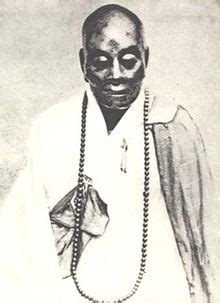
Hui Neng overheard these words: “Depending on no thing, you must find your own mind.”
Hui Neng’s clarity came from not in the finding his own mind but in the looking for it, without dependence on any thing. This “without dependence on any thing” seems to indicate he did not look to doctrine, gurus, teachers, Gods, paths, no ideas of enlightenment or expectations of divine intervention by something or someone outside his own mind. He remained vigilant within. I think of the sword of Manjusri. I imagine it took immense courage to let go of reliance on the wisdom of others, or on something thought of as the Way.
In Case 23 of the Gateless Gate, an elder monk who was the heir-apparent of the monastery wrote: “The body is the Bodhi tree. Holding heart-bond like a mirror bright. Never cease to polish it. And never let the dust alight.”
Hui Neng, who thought of as a barbarian working in the kitchen, when responding to this wrote: “The mind of Bodhi has no tree. There’s no stand for a bright mirror. Buddha-nature is ever self-clearing. So where could dust alight?”
Pretty clean slate I’d say. Just Hui Neng’s native intuition. No path, no wisdom, no gain…
Native intuition, cognitive awareness. This type of understanding actually gives us a clean shot at just be-ing. That is really all there is. Ups and downs, joy and anger, ecstasy and terror. Just be-ing. Actually experiencing life as it is, without the protection of a belief. This, it seems to me, is the essential point. Every practice, teacher, master, method, sutras that I have encountered all make this same point ultimately.
There is no acquisition, just recognition.
So how are we to view Hui Neng’s words? I’d say like the finger pointing to the moon. Not the moon.
It’s up to you alone. Will you release your ideas about the path, the teaching, the posturing, the comfort-seeking-thinking, the striving and just be? It’s a process of realization, not discovery. And you know it, it’s already there. Just be-ing, depending on no-thing.
Layman Pang approached a teacher and asked to be shown his true nature. The teacher remained silent a long time. Tired of waiting, Pang got up and walked toward the door. Just as he got to the door the teacher called out; “Oh, Layman Pang.” “Yes?”, replied Pang. “That’s it”, said the teacher.
Hui Neng
Deep Peace and Great Love, Issan (a). & Zenho
Noah’s Poem
Around and around the
Fire pit of stones
Unlit candle resting
In the ashes
In the center
What is the prayer?
What is the question?
When does the candle
Become become
Alit
in the dawn filled
Breeze of the forest
SCHEDULE 8/10-8/16
MONDAY, 7PM, DREAM KOAN AT THE TEA HOUSE OR ZOOM
Join Zoom Meeting
https://us02web.zoom.us/j/81182899201?pwd=UVU4MnJhMG1ZUGJaOHhaSndwQ2dYQT09
TUESDAY, 6:30 AM, ZAZEN AT THE TEAHOUSE, DOKUSAN WITH ISSAN
WEDNESDAY, 6:30AM: ZAZEN AT THE TEA HOUSE OR ZOOM
Join Zoom Meeting
https://us02web.zoom.us/j/89605039197?pwd=VTVubW5pUnBCNFBqQjBieERvNDd5QT09
 No Gate Zen Center
Thanks to the author this week. Human being is often difficult and being with the pain of it is terrible and wonderful
LikeLike