
Waves roil in the earthen pot
the wind’s thin wail starts up
simmering tea and serving it,
offering it to all mankind;
a shame no one who comes
understands it’s real taste;
siting alone I brew for myself
a tea beyond compare.
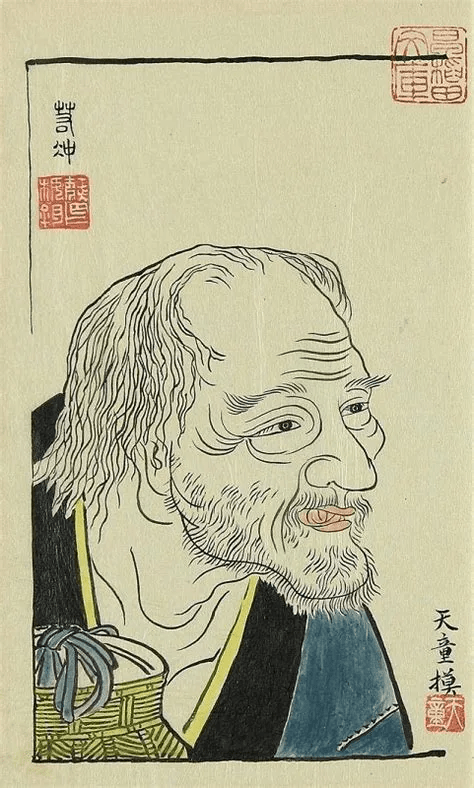
This poem is from “The Old Tea Seller” a book of poems by Baisaō, an 18th century poet from Kyoto. He was a Buddhist priest who made his living selling tea on the streets. “Though he would never consider himself a Zen master, many considered a visit to his tea stand to be of profound significance.”
There is an expression in Hebrew; לבד הנשמה טהורה, it means “Alone the soul is pure”. It was told to me by my very old Aunt Esther, at a difficult time in my life when I felt very alone. I sought counsel and advice from trusted friends but it seemed to ring hollow. I wrote it on the wall of my pottery studio and over time, began to understand what it meant for me:
There is a time which falls upon each of us when no outside voice can bring enlightenment to our present condition.
Perhaps, a time to make myself some tea.
Baisaō’s poem points directly to our solitude. To our inner world.
The earthen pot, none other than the vessel of our consciousness. The world stirs constantly around us, our thoughts, desires and travails. The many waves that create turbulence in our daily lives, distractions. Yet just as these waves are contained in the pot so too is something deeper, a stillness that is the truth of being, just under the surface, a truth found only in solitude.
Impermanence and transience, like the thin wail of the wind we might say, speak of the imperceptible forces that both guide and influence us. These are the subtle movements we perceive as the illusion of time and constantly shifting circumstances. Sometimes our perceptions cut through with acuity, sometimes veiled, as cloaked in steam.
Yet, amid these turbulent waves and transient winds we have no choice but to engage in the activities of all Buddhas; “eating rice and walking, standing, sitting, lying down”. The mundane tasks that are the stuff of life. When we are in touch with our natural awareness, each task, no matter how simple, may be an act of caring and presence, for ourself and expanding outwardly toward others. Staying in touch with that awareness is a challenging vow. When attention is given to these simple acts we may “forget the self”, and in doing so relieve our personal confusion and suffering. Isn’t this the initial step that is bound inextricably with the bodhisattva vow of relieving the suffering of all beings?
When we ‘serve tea to all beings’ aren’t we attempting acts of kindness, sharing wisdom and practicing understanding as best we can? Though few may understand its real taste it is nonetheless a compelling commitment that we tip the spout of that earthen vessel into their teabowl.
How is it that ‘no one who comes understands it’s real taste’? While a teacher can offer wisdom, point-out, few truly grasp it. This is simply the nature of enlightenment/delusion. Realizing enlightenment is wholly personal, even though by its nature it is interpersonal. Touching the warmth of enlightenment is a great benefit of practice and enriches our lives, but what of the real taste that Baisaō speaks of?
Baisaō’s real taste may be understood as awakening to our true nature. The fact is, the deepest understandings and truths may be pointed toward but can never be given. Theses truths must be discovered within, in solitude of mind. When we practice zazen, when we sit alone, we brew the tea of ourself. The profound personal insights we cultivate are through practice, small awakenings, when we pay attention to them, are the gradual “mist soaking the robe” that saturate us with understanding, enlightenment, awakening.
This is the tea beyond compare; first, the awakening to the self, followed by the dissolution of the self, and then the experience of the interconnectedness of the ten thousand things, of all beings, our true nature. This is the weight of water, the fullness of the teapot and the elegant, functional form of containment. This is the taste of oneness that transcends ordinary taste or ordinary understanding.
Find it for yourself.
The true depth of this experience is not something that can be shared with words or actions. Turning words and compassionate actions are the symptoms of this deep personal understanding, but it cannot be transmitted through words and writing. This taste must arise from within the benefaction of solitude when we sit with ourselves, experienceing our own clarity and wisdom; the taste beyond compare. Knowing this taste we meet directly with the essence of life as we engage in the activities of all Buddhas.

This morning in the pre-dawn light
alone on my zafu
a steaming bowl of tea at my feet,
the ten thousand things!
Peace and Tea Beyond Compare,
Issan
Schedule 10/20-26
Monday: 6:30 am, Zazen, Sokukai hosting
Wednesday: 6:30 am, Zazen & Service, Dokusan, Issan Sensei
Friday: 6:30 am, Zazen, Sokukai hosting
 No Gate Zen Center